
YOUR OTTAWA INVISALIGN PROVIDER®
You may be wondering what to do if you have lost one or more teeth. At Innes Dental Health Group in Ottawa, ON, we offer dental implants as a reliable option to restore your smile. Dental implants in Ottawa are designed to replace missing teeth with natural-looking and secure solutions. Whether you have lost a tooth due to injury, decay, or gum disease, implants can help bring back function and confidence. By choosing dental implants, you are investing in your oral health and overall quality of life!
Missing teeth affects more than appearance. Gaps in your smile can make chewing difficult, impact speech, and even change your facial structure over time. According to the Canadian Dental Association (CDA), in 2010, approximately 6% of Canadians aged 20-79 had no teeth, and this number rose to 22% for those between 60-79 years old. Missing teeth can lead to a number of problems with both your dental and general health.
Dental implants help prevent bone loss in the jaw, which can lead to further deterioration and the loss of other teeth. They also stimulate the jawbone, preserving your facial structure and enhancing your overall smile.

When you visit Innes Dental Health Group in Ottawa for dental implants, your care follows a step-by-step process to ensure comfort and clarity:
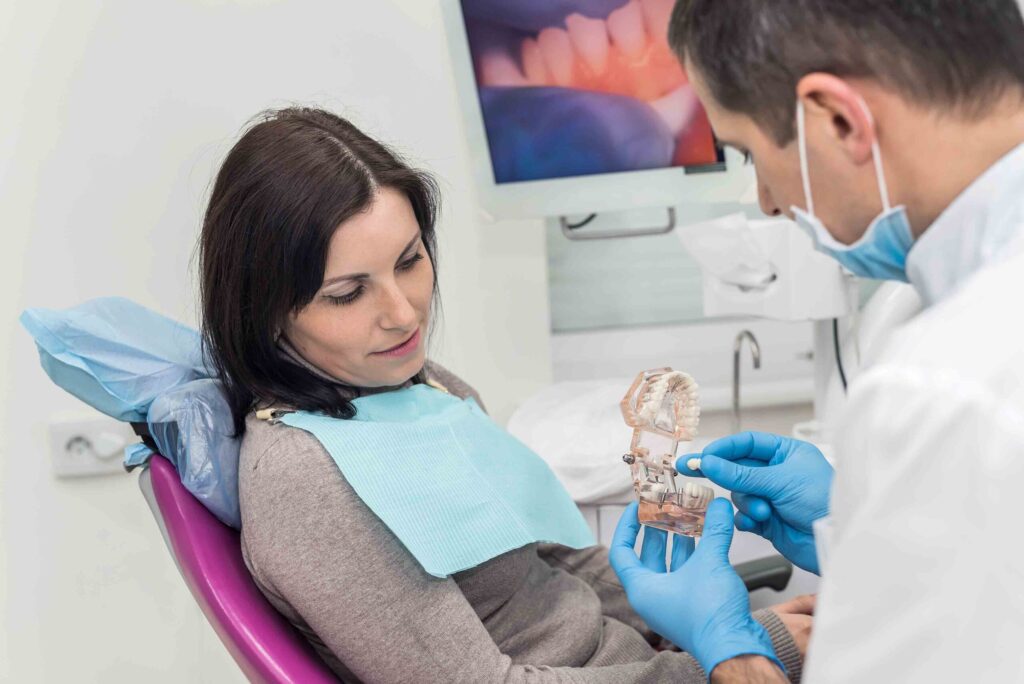
When teeth are missing, nearby teeth can drift out of line, which may change your bite, make cleaning harder, and raise the risk of gum disease and cavities. Teeth can be lost for a number of reasons, including falls, accidents, and sports-related injuries. Most of the time, it’s due to poor dental health. The CDA further notes that oral diseases, from cavities to gum disease, are linked with broader health issues.
If you’re under the age of 12, it’s completely natural for your baby teeth to fall out to make room for permanent teeth. But thanks to advances in nutrition, medicine, and technology, you should be able to keep your natural teeth throughout your lifetime!
Caring for dental implants at home is much like caring for natural teeth. You can help your implants last by following these steps:
At Innes Dental Health Group, we provide complete implant care customized to your needs. Our Ottawa team has experience helping patients restore their smiles with options that fit their goals, lifestyle, and health. From your first consultation to long-term follow-up, we aim to make each step clear and comfortable. Choosing dental implants with us means having a supportive dental team in your own community.
Dental implants are an investment in your health. At Innes Dental Health Group in Ottawa, we help you understand the cost before treatment begins. Many dental insurance plans may cover part of the procedure, depending on your plan. We provide clear estimates so you can make informed decisions. Our team is happy to also discuss payment arrangements to help make treatment more manageable. If you don’t have benefits, we also accept the CDCP for patients who qualify for the plan.
You do not need to live with the discomfort or frustration of missing teeth. At Innes Dental Health Group in Ottawa, ON, we are here to guide you through the process of restoring your smile with dental implants. Whether you need to replace a single tooth or are exploring a full-arch of implants, we can help you find the right solution. You and your family deserve strong, healthy smiles that last.
Call Innes Dental Health Group today to book your dental implant consultation and take the first step toward restoring your smile!
Dental implants are designed to be a long-lasting solution. Every patient’s situation is a bit different. Success depends on healthy gums, steady home care, and regular checkups. Treat your implant like a natural tooth with optimal oral health maintenance. Avoid smoking and keep diabetes well-controlled, as both can affect healing and gum health. Short-term implant problems usually happen because the implant doesn’t properly fuse with your bone during healing, a process called osseointegration. Factors like weak bone, uncontrolled diabetes, or smoking can cause this, and you might notice the implant feels loose, hurts, or bleeds. Long-term implant problems occur after the implant has already healed into your jaw. The most common culprit here is an infection called peri-implantitis, which affects the gums and eventually the bone, leading to discomfort, infection, and bleeding. Sometimes, it’s also due to issues with the implant parts themselves, like a broken screw.
Most patients report that the procedure feels similar to having a tooth removed and consider it to be a smooth process. We use an anesthetic to help you feel completely at ease while you are in the chair. You may feel a slight pressure, but no pain, during the procedure. Some discomfort, swelling, and bruising at the implant surgical site may occur afterward. In the first few days to weeks after your implant surgery, your bone and surrounding tissues will be healing. We will provide clear instructions for rinsing, brushing, and your activity level to help ensure a smooth healing process.
If you’ve lost one or more teeth, there are several options to choose from to replace them. Here’s how you can compare and understand each:
The total cost for dental implants will vary from person to person and will be discussed with our dentist, who will be performing the procedure. A patient requiring a single implant in response to a facial injury or tooth loss should expect a different cost for their dental implant than someone receiving full-mouth dental implants. To understand the cost and value of dental implants, it is necessary to know what dental implants are and what differentiates them from alternative treatments.